Jitnipa House
Project :
Architecture and interior Architecture (Residential Renovation)
Programs :
Universal Design, Private Living, Multi-Generational Home
Client :
Private Owner
Location :
Parkway Home Housing Estate, Soi Rat Phatthana 22, Saphan Sung District, Bangkok, Thailand
Year :
2025
Total Area :
250 sq.m.
Status :
Design Development
Key Strategies :
Universal design for elderly and future-proofing, Safety-focused spatial zoning and privacy integration, Glubam timber roof structure with modern façade, Service routing along building perimeter for low-impact maintenance, Semi-outdoor spaces with passive cooling, Permeable surfaces and on-site water management system
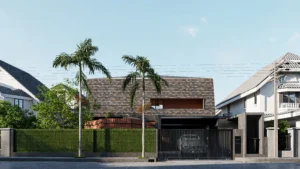
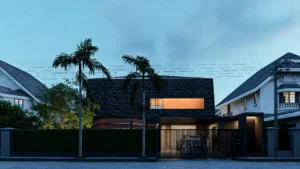
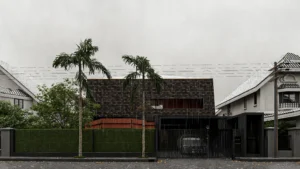
Jitnipa House is a sensitive and thoughtful residential renovation located in a gated housing estate in Bangkok. Designed for a small family, comprising a woman homeowner and her elderly grandmother, the project responds to the dual priorities of safety and privacy, as well as the need for universal accessibility. With a total renovation area of 250 sq.m., the design transforms an aging two-story house into a warm, functional, and adaptive home that balances emotional needs and technical precision.
The architectural approach emphasizes a sense of enclosure and control, reflecting the client’s desire for long-term safety and quiet personal space. The layout is reconfigured with both owner and caregiver in mind, with two ground-floor bedrooms, step-free access, and a glass partition that enables passive observation of the grandmother’s room. On the mezzanine, a flexible space is introduced to accommodate grandchildren or guests. The rear yard is fully built out to maximize usable space, while maintaining clear boundaries and visual order.
Context & Renovation Strategy
The original structure had undergone multiple uncoordinated additions over the years, resulting in water leakage and material fatigue. The renovation strategy involves selective demolition of damaged roofs, removal of redundant structural elements, and introduction of a new circulation pattern. The design carefully preserves mature trees on-site, leverages the family-owned home across the street, and enhances both indoor and semi-outdoor comfort zones.
Design Approach
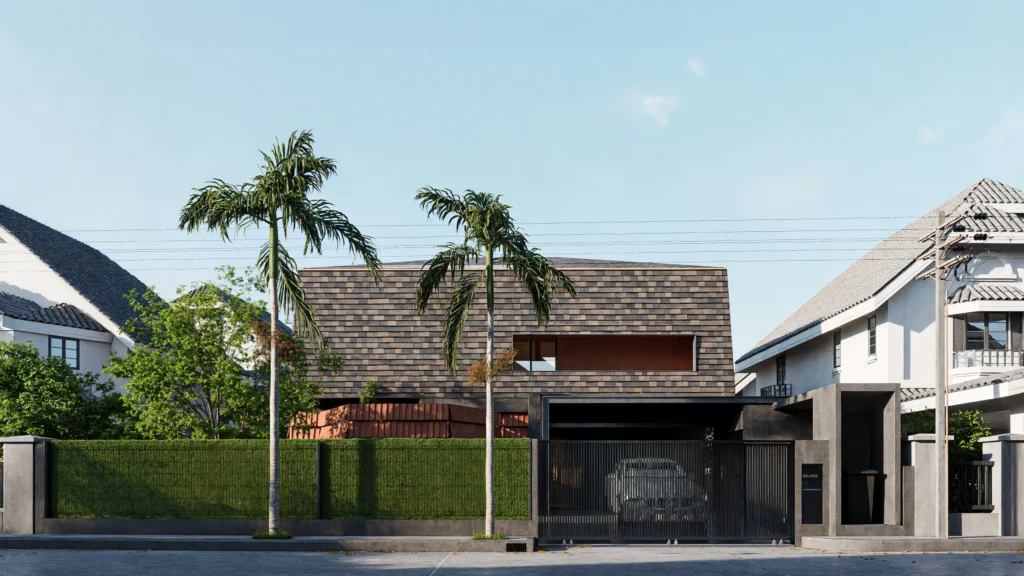
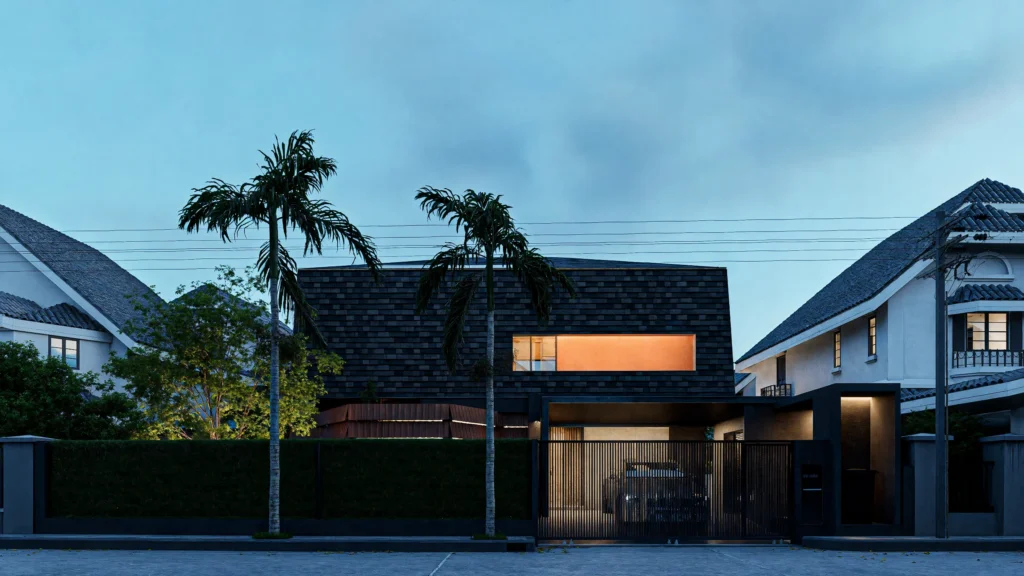
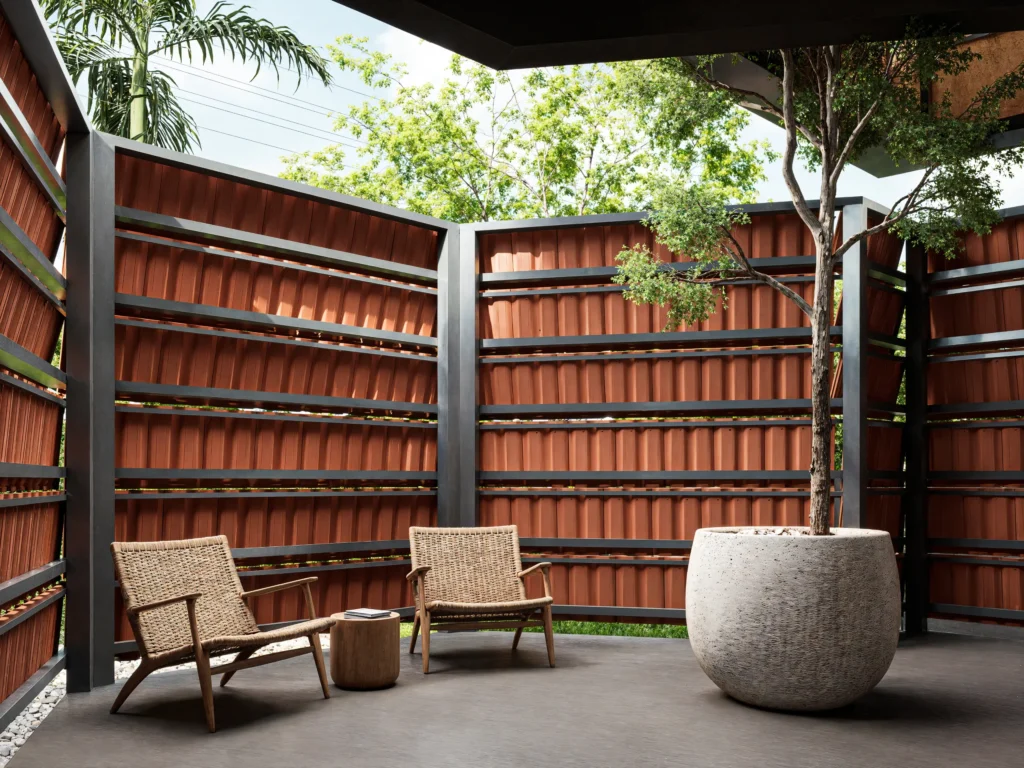
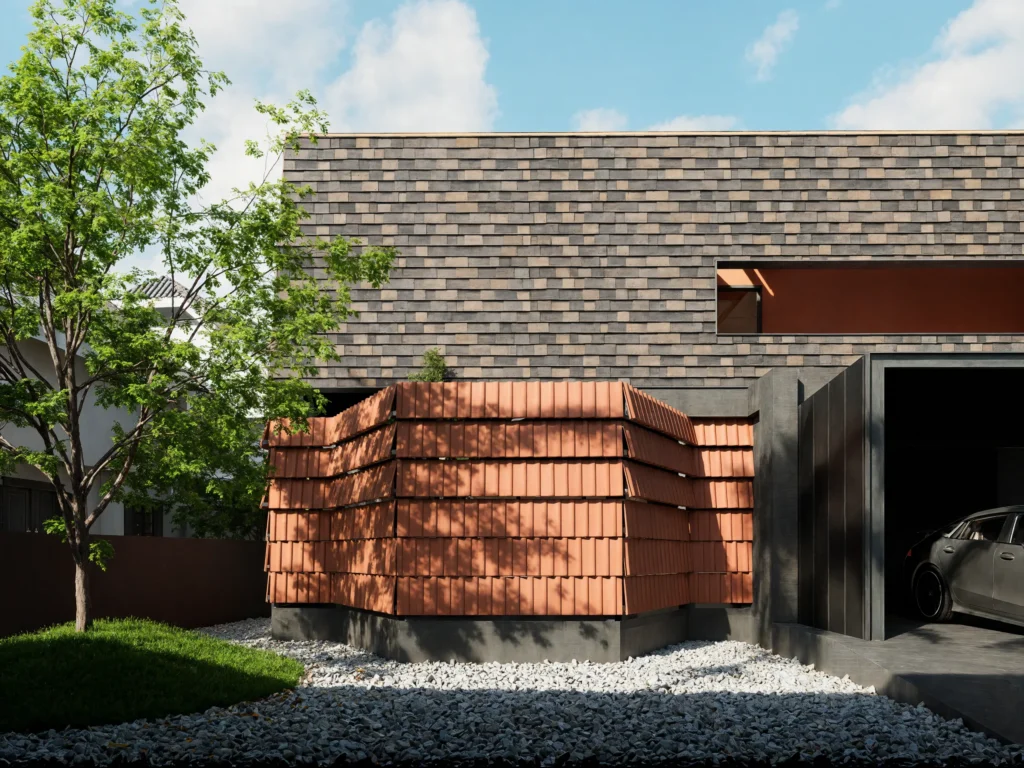
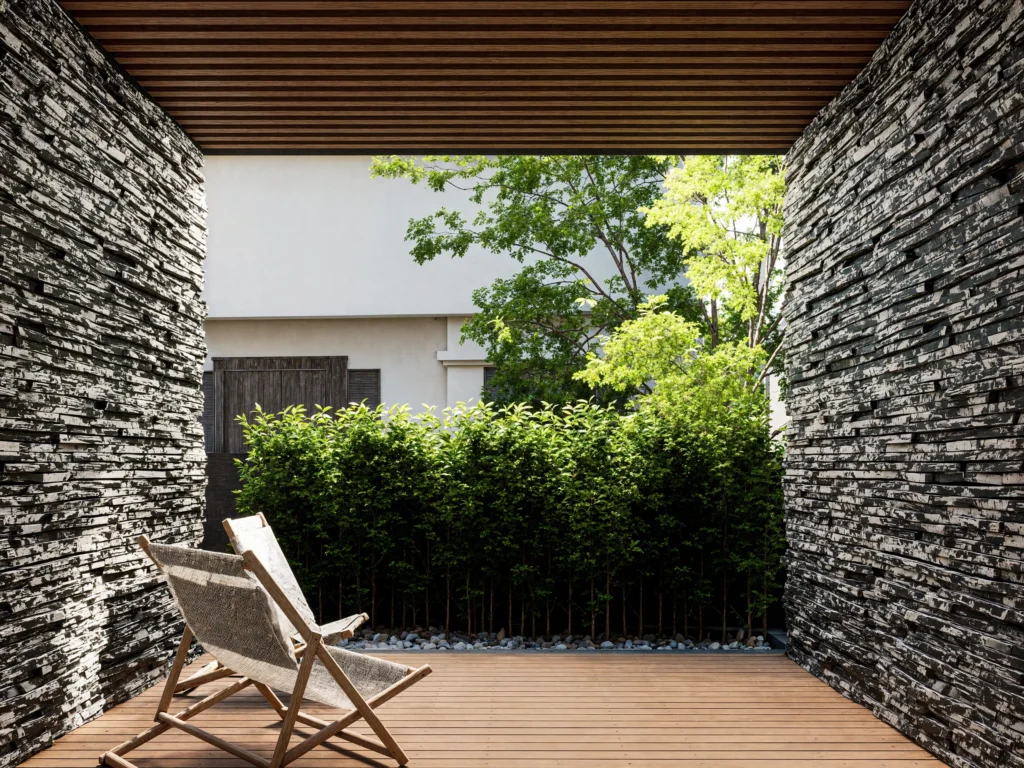
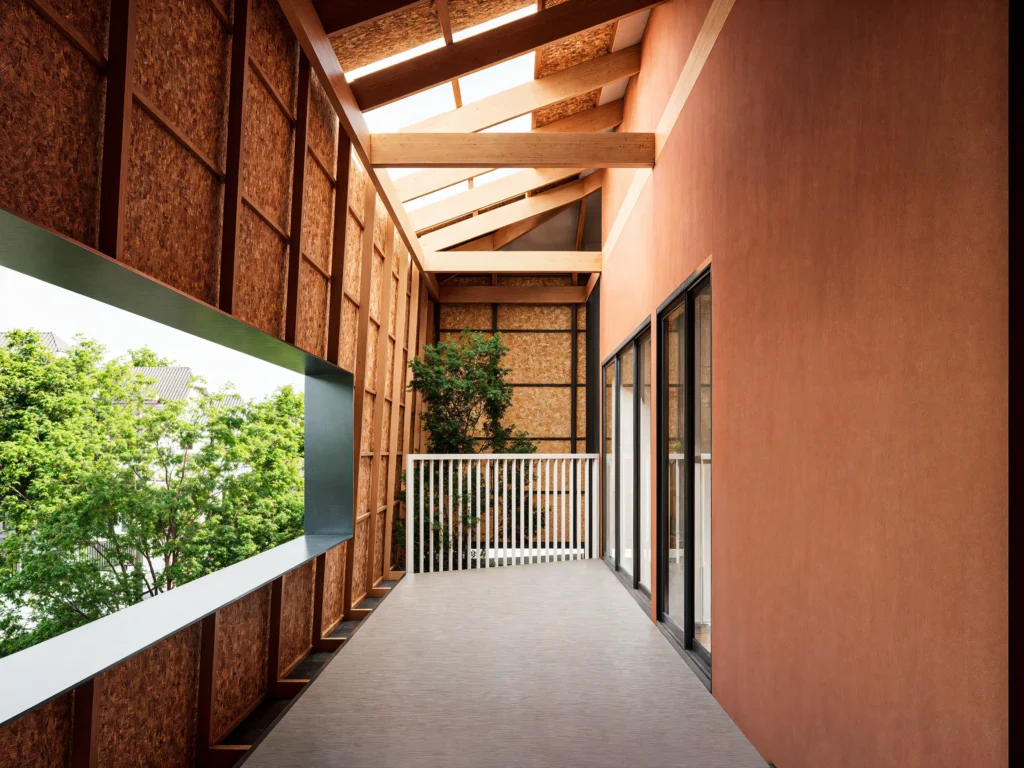
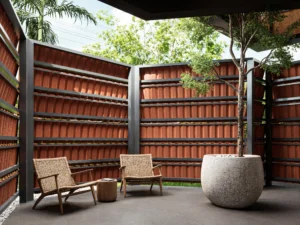
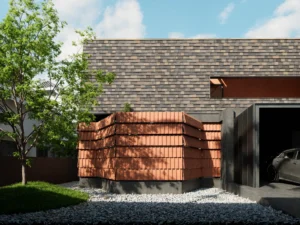
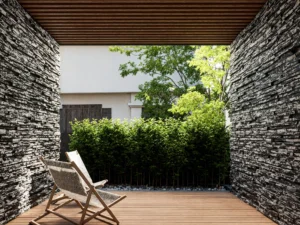
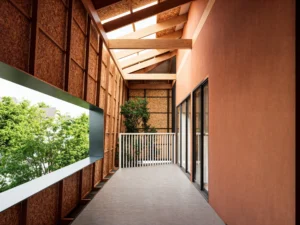
At the heart of the design is a modernized Glubam timber roof structure that defines a clean, monolithic architectural language while enhancing thermal performance and visual warmth. The building façade is reimagined as a double-layered protective skin, a passive system that provides shading, ventilation, and rain screening. In a gesture of sustainability, CPAC Monier roof tiles from the original structure are repurposed as privacy screens, reducing waste and adding texture to the semi-outdoor relaxation zone.
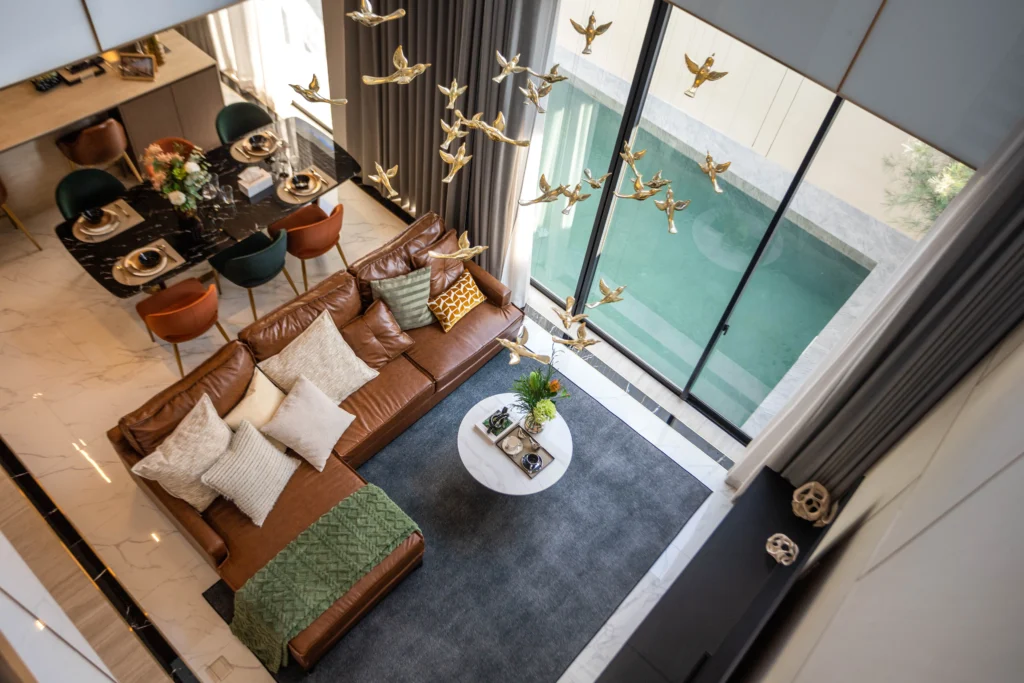
The living and dining areas are reorganized into an open, double-height volume that introduces natural ventilation and spatial generosity. Zoning follows strict logic: public, private, and service areas are clearly delineated, with service lines routed along the perimeter to allow for future maintenance without disrupting internal living spaces.
Water Management
Water-sensitive strategies are seamlessly integrated. Permeable paving blocks (40x40x19 cm) are installed with full concrete substructure to enable gradual infiltration, reduce surface runoff, and direct water toward root zones of large on-site trees. Roof slopes and drainage lines are aligned to protect both structure and landscape while enhancing environmental performance.
Philosophical Alignment with nppn Design and Research
Jitnipa House exemplifies nppn’s philosophy of designing with empathy, systems thinking, and environmental foresight. It reflects the firm’s commitment to aging-in-place design, material reuse, and climate-responsive renovation. The project is modest in scale but profound in its implications, demonstrating how careful design can support multigenerational care, gender-sensitive privacy, and the evolving needs of everyday life.

Related Projects